
 Same Day Clinic Hours
  (563)
(563) 
Understanding Measles and Preventing the Spread
August 15, 2025 in News, Public Health
Delaware County Public Health (DCPH) is emphasizing the serious nature of measles. As school begins, it’s critical to ensure everyone is up-to-date on recommended measles-mumps-rubella (MMR) vaccines. Individuals who are unvaccinated and have been exposed to measles are subject to a 21-day quarantine period, which can pose a great challenge for families.
Measles is highly contagious and can remain airborne for up to two hours after an infected person leaves an area. This disease can spread simply by being present in the same area previously occupied by a person with measles.
Measles can lead to severe illness, including potential brain damage or death.
WHAT YOU NEED TO KNOW:
- Measles symptoms typically include a high fever (may spike to 104°F or higher); cough; runny nose; red, watery eyes; and a rash which breaks out 3-5 days after other symptoms begin. Symptoms present 7-14 days post-exposure.
- Call your healthcare provider immediately if you think you or your child have been exposed to measles.
- Do not go to the clinic or hospital without calling first if you think you or your child could have measles or have been exposed.
- Get vaccinated. Call your healthcare provider today to make sure you and your child(ren) are up-to-date with the MMR vaccine.
“Measles spreads faster and farther than most people realize,” shared Krystle DeShaw, DCPH Manager. “One case of Measles has the ability to infect up to 90% of nearby unvaccinated people. Our best defense is prevention through vaccination.”
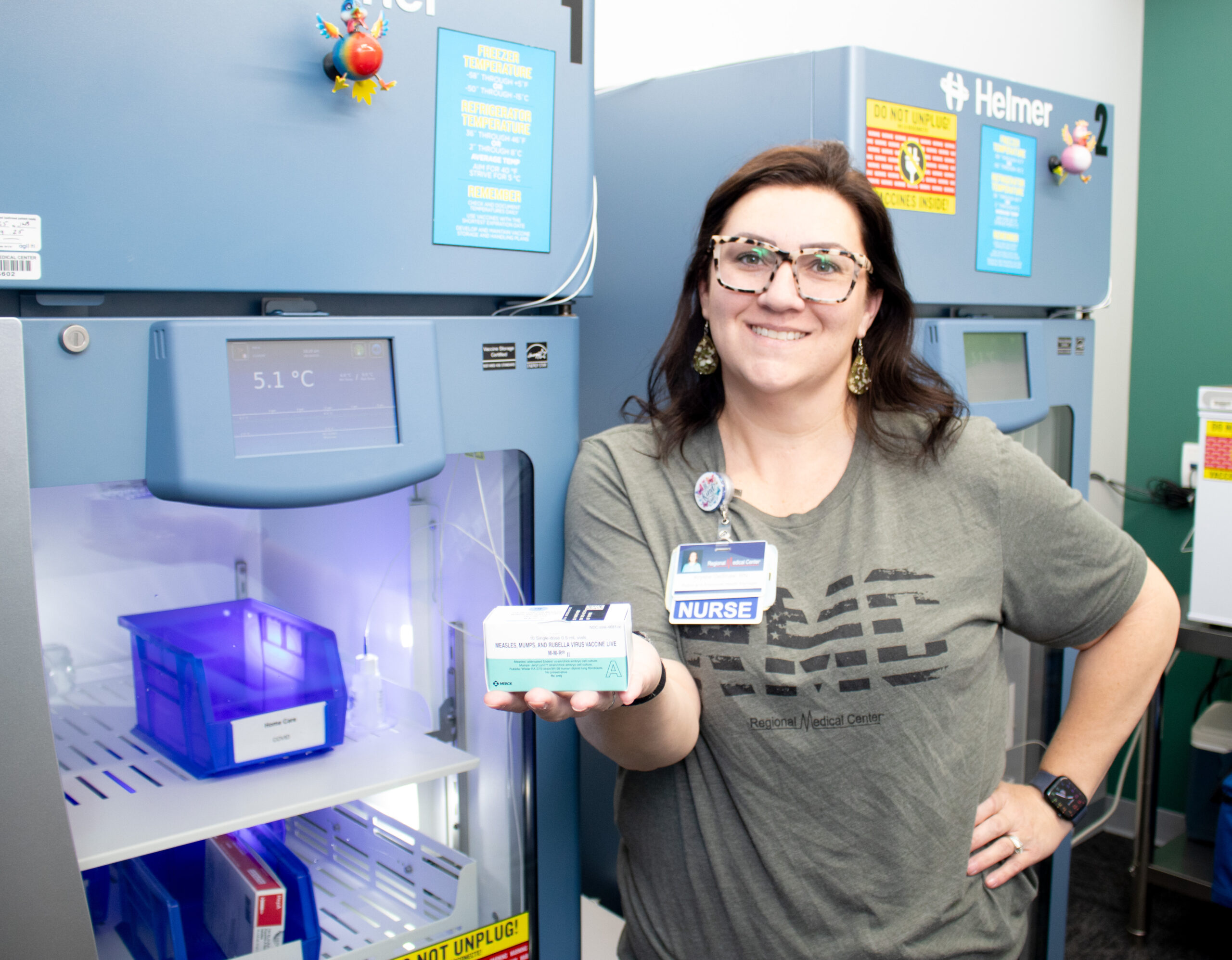
One dose of the MMR vaccine has a 93% effectiveness, while two doses exhibit 97% effectiveness. A free MMR vaccine is available. Call DCPH for an appointment at 563-927-7551.
Given 2 new, unlinked cases of measles in the region, Iowans could consider earlier MMR vaccination. Typically children receive one dose at 12–15 months and a second dose at 4–6 years. However, Iowans could now consider:
- An early extra dose of MMR between 6 and 11 months of age (“dose 0”); this dose does not count toward the routine series
- The first routine dose (dose 1) can be given after 12 months of age, at least 28 days after dose 0
- The second routine dose (dose 2) can be given at least 28 days after dose 1, instead of waiting until age 4–6 years
For more information or guidance, call DCPH at 563-927-7551 or contact your primary healthcare provider. For more information about measles, prevention and the latest outbreak statistics go to cdc.gov/measles.